For teachers to send home
Parent & Home Follow-Up
A one-page take-home sheet you can print and send to parents and guardians. It explains what students learned about responsible AI and gives families six conversation starters that actually work at home.
Notes for you before you send it
- 1Send the sheet home after the AI Rules lesson, not before — families should get the same language students did.
- 2Attach it to an existing newsletter or class message rather than as a standalone item; it gets read more often.
- 3If your school has a published AI or academic integrity policy, add its name in the space provided.
- 4Encourage one conversation, not an interrogation. Suggest families pick a single starter at dinner.
- 5Offer to answer questions. Parents are often more anxious about AI than students are.
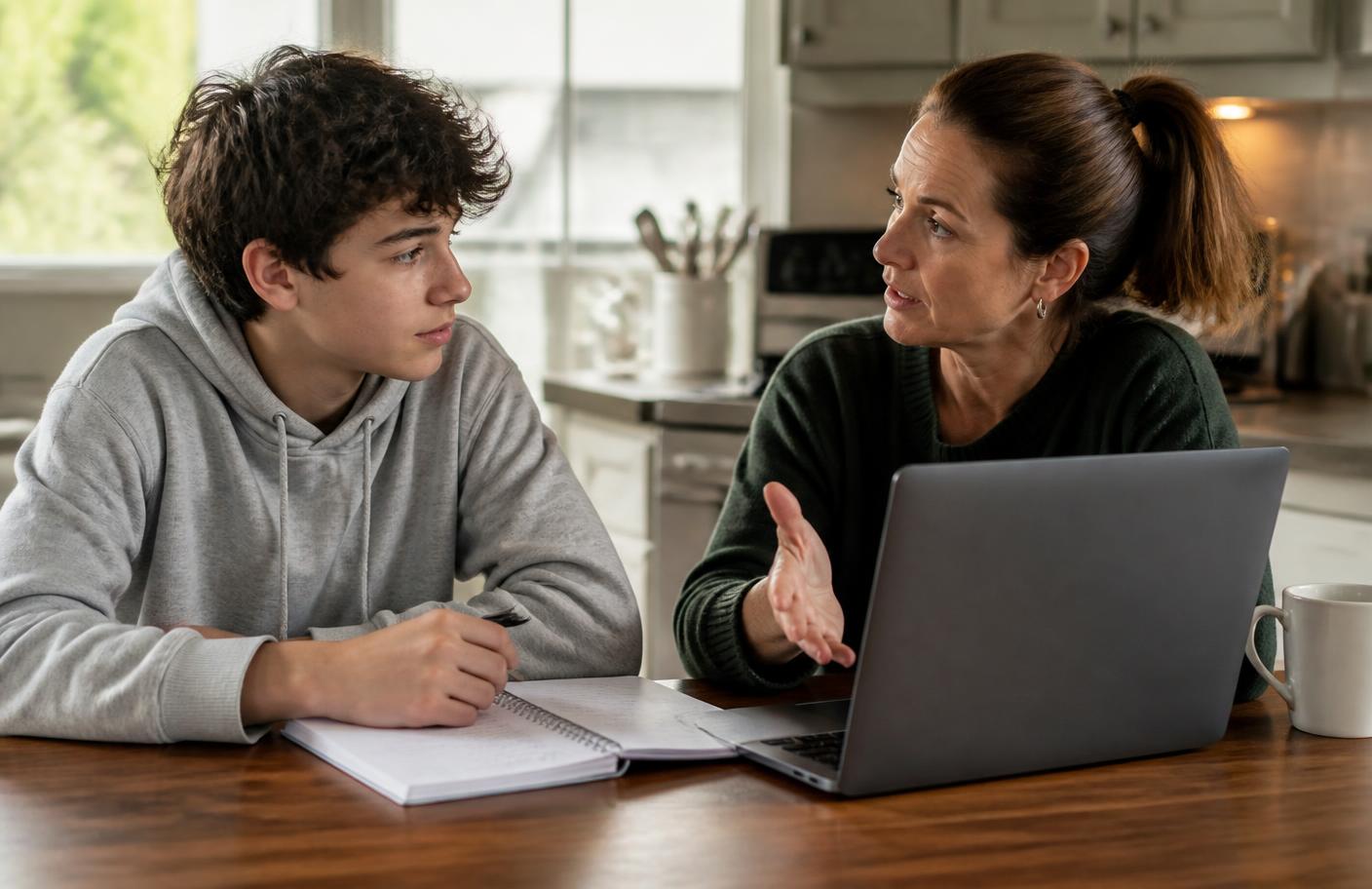
Tone matters at home too
The printable take-home sheet
Responsible AI at Home
Parent / guardian take-home · 1 page
A note for families
Responsible AI at Home
Teacher: ____________________ Class: ____________ Date: ____________
Our students recently took part in a presentation by Jim Jordan (JimmyAI) about using artificial intelligence responsibly, ethically, and skillfully. We have been continuing that conversation in class. Here is what your student has been learning, and a few questions you can ask at home.
What students learned
- AI is a tool, not a shortcut. It can support learning, but it cannot do the learning.
- Helpful uses include explaining a concept, generating practice questions, giving feedback on the student's own draft, and planning study time.
- Misuse includes submitting AI-written work, using AI during a live test, inventing sources, and hiding AI use when disclosure is required.
- AI can be confidently wrong, so students must verify facts and sources themselves.
- Before submitting anything, students run an Integrity Check: understand it, explain it, verify it, own it.
Six conversation starters
- What is one thing you learned this week that you could explain to me right now, without looking anything up?
- When does AI actually help you learn something, and when does it just get the assignment finished?
- How do you know whether something AI told you is true? Show me how you would check.
- What are your teacher's rules about AI in each class? Which class has the strictest rule?
- What is one skill you want to be genuinely good at — good enough that you would not want AI doing it for you?
- If a friend shared AI answers in a group chat before an assignment, what would you actually do?
The one line worth repeating at home
AI is a tool, not a shortcut. Our goal is students who become more capable — not more dependent. Before any work is submitted, students should be able to understand it, explain it, verify it, and own it.
Our school's AI or academic integrity policy: ______________________________________
Questions? Contact: ______________________________________
Post-Presentation Teacher Resources by Jim Jordan | JimmyAI